Sustainable Seaweed Farming Could Boost Coastal Communities, Economies, and Marine Health
Responsible growth across Alaska and British Columbia will require broad collaboration
Overview
The cold, nutrient-rich waters off British Columbia and Alaska are home to some of the most spectacular and diverse marine ecosystems in the world, featuring more than 500 known seaweed species, from smaller red and green seaweeds to towering giant kelp that can grow as much as 2 feet a day.1
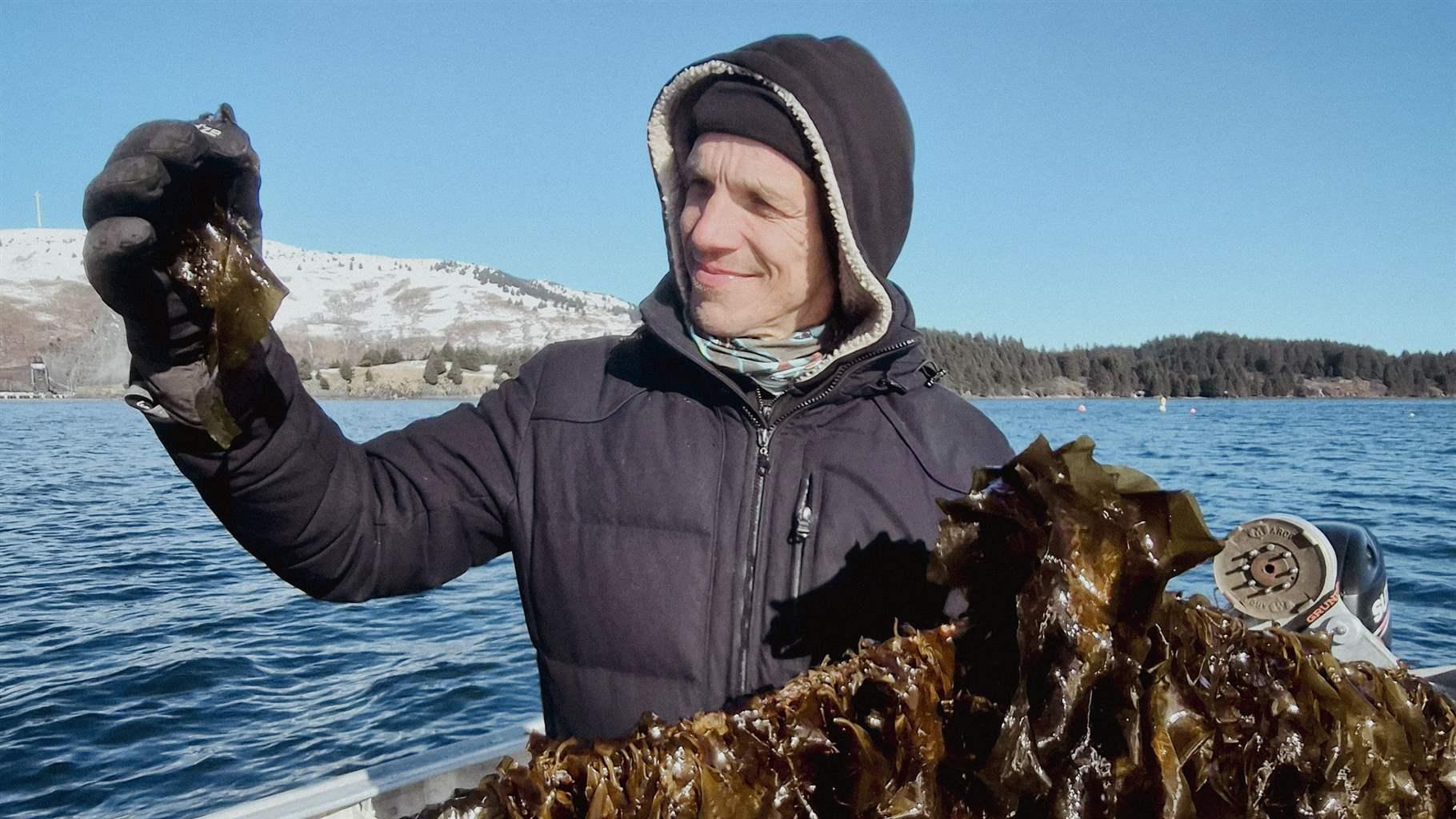
Not only is seaweed critical to the health of these ocean environments, but it also holds considerable economic potential for the region. It can be harvested from wild populations or farmed on seeded lines that are submerged in coastal waters. Seaweed farming—which unlike many other forms of aquaculture does not require added feed, land, fresh water, or chemicals—has a long history in Alaska and British Columbia. Indigenous peoples have stewarded seaweed for thousands of years, including cultivating it for food, medicine, tools, trade, and other traditional purposes.
But as global demand for seaweed has increased, interest is growing in commercial-scale farming of kelp, a group of large brown seaweeds, which can be used for food, fertilizer, feed for agriculture, bioplastics, textiles, nutraceuticals, pharmaceuticals, and biofuels.
With coastal communities in the region experiencing growing environmental and economic challenges, including warming waters and declining fisheries, seaweed cultivation offers a critical opportunity. If done sustainably, it could help develop and diversify local economies, improve coastal water quality, provide habitat for marine species, and reduce the effects of ocean acidification near the farms.

Meaningful consultation and collaboration can ensure sustainability
In 2025, Alaska grew approximately 240,000 pounds of seaweed, and in 2023, British Columbia’s production was more than 165,000 pounds.2 An expanded industry could support hundreds of year-round jobs as well as millions of dollars in tax revenue and economic activity.3
But sustainable production at that scale will require community input and support. Federal, state, and provincial governments need to meaningfully engage and consult with Indigenous and local farmers, who are helping to shape the seaweed farming industry before new policies or rules are put in place.
At the same time, to ensure the long-term health of the ecosystems around seaweed farms, state and provincial leaders, in collaboration with farmers and communities, should ensure that they have sufficient environmental safeguards in place.
Shaping a sustainable future for seaweed farming
As seaweed cultivation expands in Alaska and British Columbia, a window of opportunity is open to shape the sector’s development in a way that benefits people and nature. Although individual approaches will differ based on the distinct histories and governance systems throughout the region, the underlying principles remain the same: incorporation of science and Indigenous priorities in decision-making, cooperative implementation of robust ecological safeguards, adaptive management, and economic policies that support communities.
If the region builds a sustainable industry centered on these values and commitments, it can become a global model for how to grow the seaweed farming sector responsibly, bolster local economies, respect community priorities, and support healthy coastal ecosystems.
Endnotes
- “An Introduction to the (Macro) Algae of British Columbia,” Colin Bates, Electronic Atlas of the Flora of British Columbia, https://linnet.geog.ubc.ca/biodiversity/eflora/algae.html. “Kelp Forest,” National Oceanic and Atmospheric Administration, https://sanctuaries.noaa.gov/visit/ecosystems/kelpdesc.html. “Alaska Kelp Farming: The Blue Revolution,” Mark Stopha, Alaska Department of Fish and Game, Alaska Fish & Wildlife News, April 2020, https://www.adfg.alaska.gov/index.cfm?adfg=wildlifenews.view_article&articles_id=949.
- GreenWave, “State of the Kelp Industry: A Decade in Review and the Road Ahead,” 2026, https://hub.greenwave.org/lms/resources/state-of-the-kelp-industry/.
- McKinley Research Group, “Alaska Seaweed Industry Expansion Scenarios,” 2022, https://afdf.org/research-library/alaska-seaweed-industry-expansion-scenarios.
People