Uncertainty Surrounding Federal Disaster Funding Looms Over State Budgets
State fiscal debates to watch in 2026

This is one in a series of five articles examining key debates that will unfold in the nation’s statehouses in the year ahead.
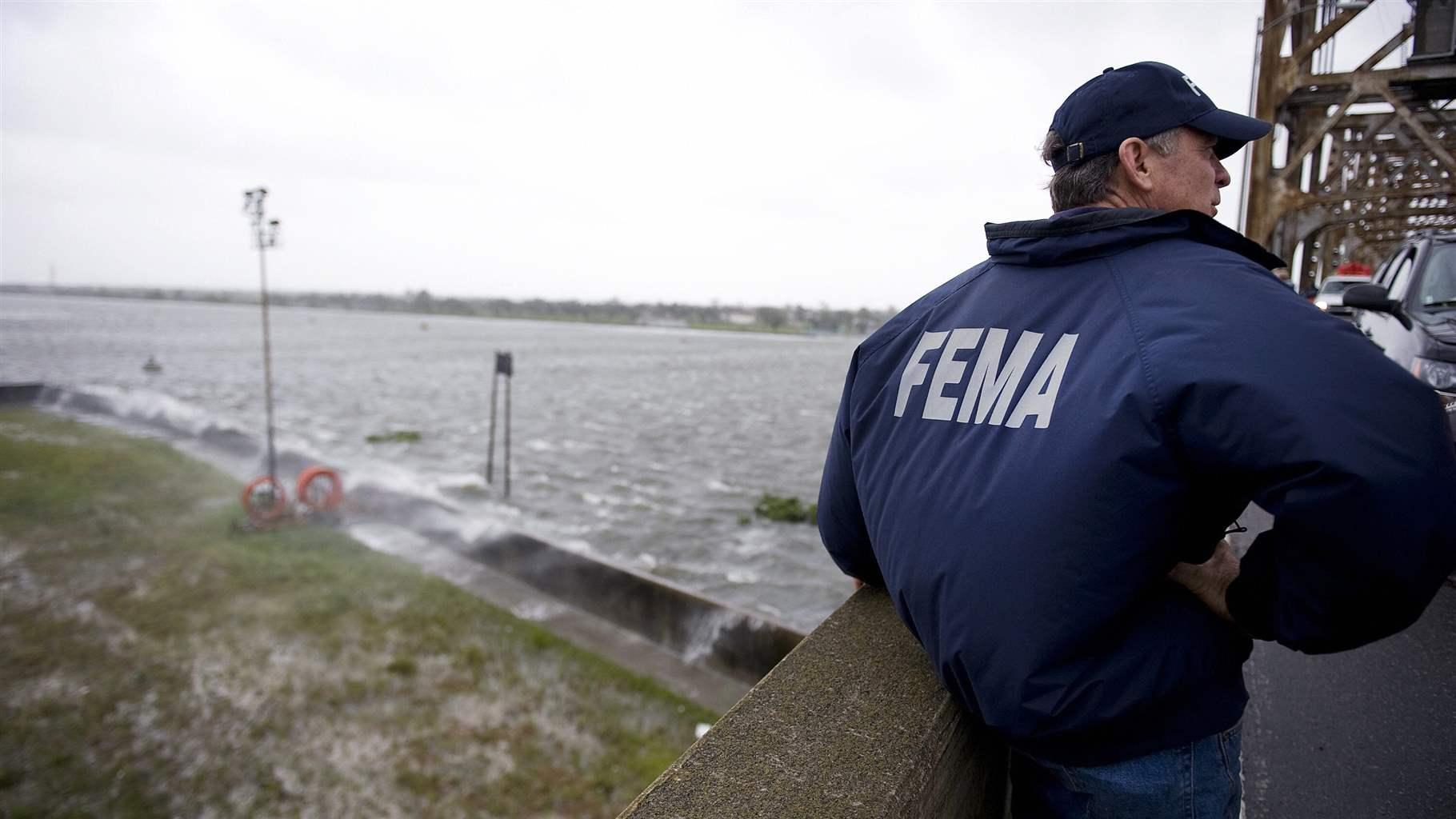
As the frequency and cost of natural disasters has increased nationwide, states’ approaches to budgeting for catastrophic events has heavily relied on the ready availability of federal funding. But now there is growing uncertainty around the entire disaster assistance system—which funds activities before, during, and after disasters occur.

States are already adjusting to recent shifts in how these federal funds are distributed, even as they navigate growing uncertainty around potential changes to the structure and workings of the Federal Emergency Management Agency (FEMA), which has delivered the bulk of the aid. Historically, the cost of disasters has been borne by a combination of the federal government, state and local governments, individuals such as homeowners and business owners, and the private insurance market. And, while efforts to shift relative responsibilities among those parties are not new, states are now confronting significant changes in federal policy at the same time as their budgets are tightening.
“States are now bracing because they don’t know what will be expected of them in the disaster realm, capacity-wise,” said Nicole Ezeh, legislative director for state-federal affairs at the National Conference of State Legislatures. “That part of FEMA is really important to states because they don’t have the buying power to do that on their own.”
State budget stress complicates disaster funding strategies
The federal changes come at a time when states’ capacity to cover rising disaster costs is already being tested by a new era of budget pressures characterized by uncertainty and a decline in revenue collections from record highs. The broader strain is driven by widespread deficits; decreasing tax revenue, whether from phased-in cuts or economic shifts; reductions in funding for Medicaid and the Supplemental Nutrition Assistance Program (SNAP); and increased demands on spending.
One of those growing demands is the rising cost of disasters. To handle these needs, states rely on a variety of funding mechanisms, including tapping rainy day funds when disaster strikes. North Carolina, for example, dipped into its then-record-high reserves in fiscal year 2025 to respond to the widespread effects of Hurricane Helene. Nationwide, however, rainy day fund capacity is falling, and most general reserves are not structured to serve as a recurring funding source for disaster relief and would be insufficient to replace lost federal disaster aid if that funding shifted substantially.
In response to this growing budget pressure, some states have recently bolstered specific disaster-aid funds. Lawmakers in Minnesota passed a law in 2024 that automatically transfers money from the state’s general fund during budget surpluses to a state disaster-assistance contingency account. And Massachusetts established a statewide disaster account in the fiscal 2025 budget as a financial guardrail against back-to-back disasters. Policymakers in the state are considering funding the account with a dedicated revenue stream.
Both of these mechanisms can position states well to weather a disaster but are also contingent on the state having a surplus or the revenue available. Increasing fiscal instability, however, might make those conditions harder to meet and potentially reduce how much states can set aside. Together, this means that it’s getting harder for states to cover the rising costs of disasters at a time when shifting federal aid might make state reserves more crucial than ever.
Reduced federal assistance already challenging states
As states wait for more information on new policy proposals from the federal executive and legislative branches, funds at every stage of the disaster assistance process are already facing delays, denials, or cancellations. Citing slower and smaller FEMA reimbursements, New Mexico passed a bill during its 2025 special session allocating an additional $30 million to the state’s Appropriation Contingency Fund for rapid disaster response.
Current funding changes are also affecting grants intended to help states and local governments reduce the impact of and be better prepared for future disasters. For instance, states have not received allocations of Hazard Mitigation and Grant Program dollars—which help them fund disaster risk reduction projects—since the spring of 2025. Another mitigation program, the Building Resilient Infrastructure and Communities program, was canceled in April 2025, putting projects such as stormwater infrastructure in Louisiana and New Jersey on hold until legal challenges to the cancellation are resolved. And in October, FEMA halted payment of Emergency Management Performance Grants for states and imposed new requirements on state population counts to calculate distribution of the funds. States will not receive the funding, which they use to support emergency management operations and preparedness activities, until FEMA has reviewed and approved the new population certifications. The timeline for that is unclear.
Such funding delays and changes are highlighting the challenges that can arise when federal assistance, upon which states have long relied, becomes uncertain. With more changes to come, state policymakers are beginning to contemplate how to fill the gap.
Looming federal changes pose challenges and opportunities
The federal funding shifts in 2025 likely herald bigger changes to come. For example, President Donald Trump’s administration established the FEMA Review Council last January, which is tasked with reenvisioning the federal role in disaster management. Members of Congress also have a major reform plan in the works—the bipartisan Fixing Emergency Management for Americans (FEMA) Act of 2025 (H.R. 4669). The bill passed out of committee and would next head to the House floor.
A reduction in federal aid and the transfer of disaster funding responsibility to states would have major fiscal implications for states. Though these changes are still being debated, emerging proposals from the Review Council and the FEMA Act point to a fundamental reshaping of disaster assistance, altering when states qualify for public assistance dollars and how funds are delivered, as well as the amount of federal support provided more broadly.
One notable proposal would increase the amount of disaster damage that states must meet before qualifying for federal aid. Previous initiatives to do this have not been implemented, but in April 2025, the Trump administration released a memo suggesting raising the threshold for federal public assistance to four times the current figure.

Doing so would result in state and local governments footing much larger bills for disaster recovery. In fact, an Urban Institute study found that six states—Arizona, Maine, Michigan, Nevada, Ohio, and Pennsylvania—would have received no post-disaster public assistance between 2008 and 2024 under this scenario. Other states would have faced dramatic reductions in federal assistance during that same period. Virginia would have lost $534 million (representing 88% of total funding received) and Iowa would have lost $497 million, or $155 per capita.
But another proposal under consideration by the FEMA Review Council and outlined in the FEMA Act could alleviate some administrative burdens for state and local disaster response by replacing the current reimbursement-based structure of FEMA’s public assistance funds with an advance funding model. Instead of requiring extensive documentation and lengthy reviews before reimbursing actual costs, the new model would establish grant amounts based on damage estimates and pay out those funds to states upfront.
Advocates of up-front cash grants argue that it would enable faster, more flexible disaster assistance by allowing states to allocate funds based on local recovery needs, rather than waiting for federal approval of itemized expenses. A 2024 analysis of the counties that experienced a presidentially declared disaster during the previous 10 years found that nearly 73% still had outstanding reimbursement claims more than two years old totaling anywhere between $237 million and $665 million. Because local governments are typically the first to respond to disasters, they often bear the up-front costs—requiring them to resort to using bonds or other short-term financing to maintain cash flow.
Brett Mattson, legislative director for justice and public safety at the National Association of Counties, said that up-front grants from the federal government would “really alleviate one of the biggest concerns that counties face after a disaster, which is cash flow.”
But even with possible benefits, an advance funding model still has potential drawbacks. Notably, such an approach would not automatically adjust as the full costs of a disaster become clear, which can take months or years. This lack of flexibility could be problematic in the face of time-variable disaster costs, where initial damage assessments underestimate long-term recovery needs. If these changes take effect, states will need to strike a balance between quickly distributing funds and ensuring that they account for the full scope of long-term recovery costs.
The road ahead
As natural disasters grow more frequent and severe, states face a host of near- and long-term challenges as they prepare for evolving federal guidance. Amid funding shifts, stalled mitigation projects, and strained emergency operations, the potential impact of these policy changes is becoming more clear. And without consistent federal support, disaster resilience will increasingly hinge on state action—an uneven safeguard considering the current strains that state budgets are facing.
Although states are still awaiting more definitive guidance from the federal government, it is clear that states will have to navigate these policy shifts within the context of tightening budgets and rising disaster costs. FEMA changes present potential opportunities to reexamine how disasters are paid for, but they also add another layer of uncertainty and stress for 2026 statehouse sessions.
Christine Emminger, administrator for the Wyoming Grants Management Office, underscored that uncertainty. Said Emminger: “When you’ve administered programs for the last 20-something years, and then you want to completely remove a program and pick it up and put it somewhere else at the federal level, there are going to be major impacts.”
Page Forrest is an associate manager with The Pew Charitable Trusts’ Fiscal 50 team and Jad Maayah is a senior associate with the managing fiscal risks team.
People


